Table of Contents
Tuolumne County Courts, CA *

Tuolumne County, whose county seat is Sonora, is situated in the Sierra Nevada, Central California. The entire region boasts a deep history, particularly the famous 1850's Gold Rush, but fast-forward to the present day, more than 50,000 residents call Tuolumne home. Tuolumne County also features a solid legal system to cushion its residents, visitors, and businesses.
Whether they are criminal charges, civil disputes, juvenile cases, family law matters, traffic violations, or even small claims, the Tuolumne County Superior Court can handle all legal matters provided they fall within its jurisdiction. Employers can verify necessary backgrounds, landlords can check applicants' eviction histories, and attorneys from around the state can turn to the Tuolumne County Court records when they need to prepare for cases.
Overview of the Tuolumne County Court System
The legal system in Tuolumne County (just like in all California Counties) follows the guidelines of the Trial Court Unification Act of 1998. Here, the system is unified, such that the formerly separate Municipal and superior courts now fall under a singular court system, the Superior Court. The system functions under the California Unified Judicial System, which is supervised by the Judicial Council of California. Thanks to this structure, all the various types of cases lie under the same administrative umbrella, which makes the legal process simplified, especially for residents to navigate.
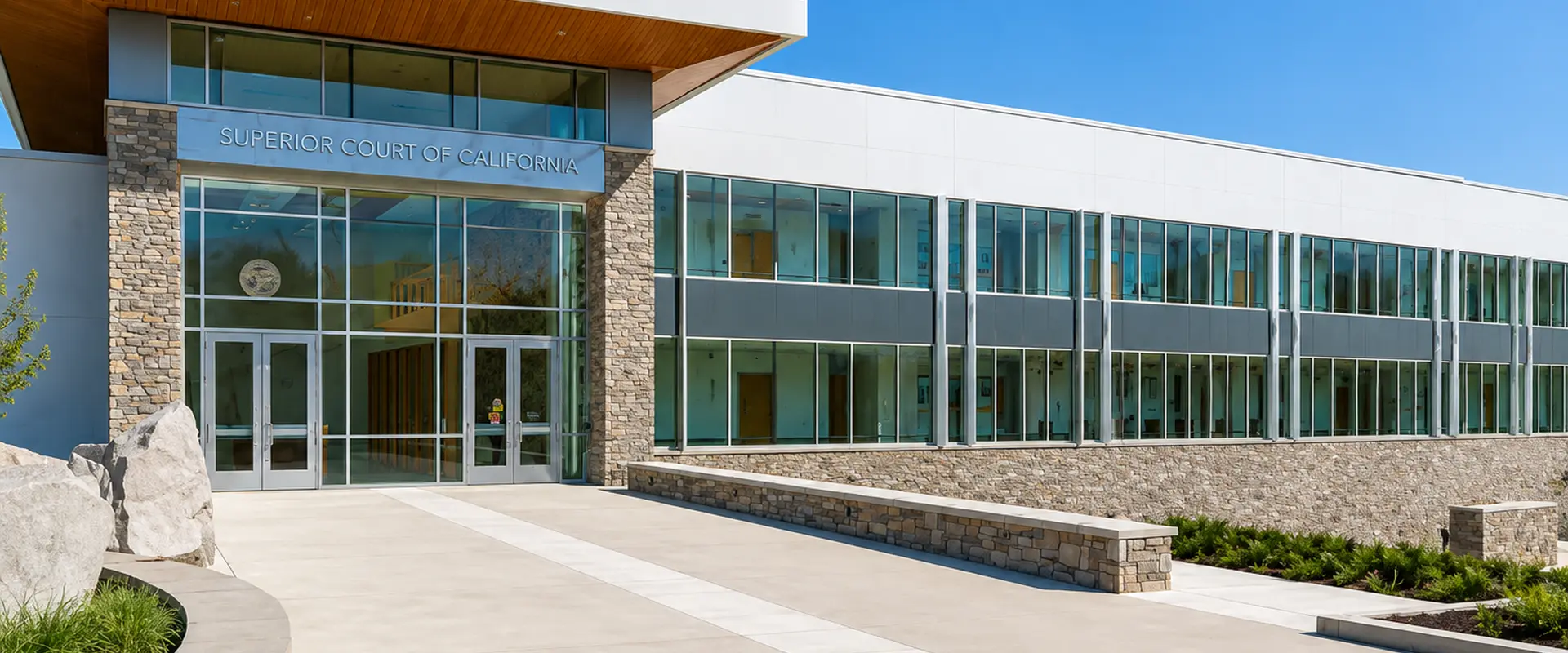
The primary courthouse is now Tuolumne's central hub for all matters of court activities, and the staff is available for you if you need help with questions about any procedure, statutes, or filing. There is also a second location, the historic courthouse. Here is where to go with all your issues pertaining to adoption, family law, or juvenile proceedings. They also have a Family Law Facilitator who can guide members of the public.
You may need help looking up a hearing date or are not sure where to file details. The state offers access to all the information you need, from court calendars to tentative rulings and forms for various divisions, on its official website. It's the best place to start when you need better access to more information.
Types of Courts in Tuolumne County, California

The first thing before taking any legal step is knowing which division your case falls under. It makes a huge difference since you want to avoid filing incorrectly and causing delays, additional costs, and other avoidable complications. While the Tuolumne County Superior Court is a single unified system, it is separated into multiple divisions according to the legal matter in question. Given that the court follows a unified structure, it means that most divisions will be operating from the same central courthouse in Sonora. As for smaller divisions like family law, adoptions, and juvenile, these proceedings take place at the historic courthouse.
The Civil Division primarily handles cases to protect people's civil rights. This includes contract enforcement, collection of damages, or cases where one party sues the other to recover property or money. You also go here for petitions to change your name or when there are unlawful detainer actions.
The jurisdiction here includes:
- Illegal detainer (eviction matters)
- Personal injury or property damage cases
- Breach of contract or debt collection claims
- Limited civil cases (less than $35, 000)
- Unlimited civil cases (more than $35,000)
These limited cases usually move seamlessly through the state's court system thanks to simple procedures, while unlimited civil proceedings are usually met with more complex arguments and feature longer timelines. For limited cases, the residents can represent themselves in court, but the larger and more highly contested cases need representation by a legal counsel.
 Criminal Division
The Criminal Division is where all cases pertaining to someone accused of a public offense are handled. These include felonies, DUI issues, misdemeanors, or violations against animal control.
Jurisdictions include:
- Misdemeanors
- DUI and related charges
- Felony Charges (preliminary hearings and arraignments)
- Post-conviction and resentencing matters
The Tuolumne district attorney's office is in charge of prosecuting felony cases, but in some instances, the cases may require several court arraignments over a longer time frame. Those who have been charged with felonies are advised to seek legal advice from legal counsel before appearing in any courtroom.
 Family Law Division
The Family Law Division handles all legal matters surrounding family relationships. Divorce, domestic partnerships, children's issues, and elder abuse are handled in this division, while adoption and guardianship issues are filed through this system, but at the historic courthouse.
Cases under this division include:
- Spousal or partner support
- Adoption or guardianship of minors
- Domestic violence or elder abuse
- Divorce, annulment, or legal separation
- Custody and visitation for children
These family law cases are conventionally more demanding emotionally and physically. The Tuolumne County Family Law Facilitator will provide free legal assistance to parties, including offering referrals and support for direction of the case.
 Probate and Conservatorship Division
The Probate and Conservatorship Division is a special branch that handles financial issues after the death of an individual. It is also tasked with proceedings surrounding the funding of adults if they cannot handle personal finances or general well-being.
Expect the following cases to fall under this division:
- Distribution of assets to heirs or beneficiaries
- Probate of wills and estates
- Deceased persons' debt resolution
- Conservatorship for incapacitated adults
The probate division is known to be quite complex and with several moving parts, particularly where the case involves massive assets or serious conflicts between heirs. For many families, probate attorneys are their go-to, allowing them to make filings according to the court requirements and to make sure that the entire process is effortless and consistent.
 Juvenile Division
The Juvenile Division handles the cases where the accused or affected are minors. Proceedings take place on the third floor of the historic courthouse, and the cases falling here include:
- Truancy or habitual disobedience
- Juvenile delinquency (where federal or state laws are violated by minors)
- Juvenile dependency (cases here concern child welfare)
What stands out in this category is that the proceedings are closed off to the public in order to protect the minors' privacy. All the cases tend to follow the procedures that are mandated by the California Welfare and Institutions Code and are handled independently, away from adult felony cases.
 Small Claims and Traffic Divisions
Unlike the previous categories, the Small Claims Division usually handles smaller monetary disputes where the amounts involve up to $7,500. This makes the proceedings less complex, move faster, and have more accessible resolutions. Legal representation is generally not permitted. You can approach the case even without legal training, since the hearings involve unpaid debts, property damage, contract breaches, or security deposit issues.
The Traffic Division, on the other hand, takes care of adult and juvenile traffic violations as well as other local ordinance offenses. For most traffic-related cases, the resolution involves paying the fine, and no court appearance is needed. The court will only mail the Courtesy Notice to your mail, stating the due date for the payment, which you can complete online, via mail, or in person. If you cannot afford the full fine amount at once, you can always use the ability-to-pay tool available online.
Lastly, the Tuolumne County Superior Court features a series of Collaborative Courts Programs, including the Recovery Court, CARE Court, and Family Treatment Court. These distinct programs are specially designed for parties whose legal issues involve substance use or mental health complications.
How to Access Tuolumne County Court Records

Members of the public can access the court files in Tuolumne County except for special cases. If the proceedings involve minors or other protected parties, the records will be sealed. Online access is found to be more convenient for people who need to make routine inquiries, but if you need certified or older records, you may have to make an in-person visit or write up a formal request to the relevant court.
 Online Access
Court calendars, tentative rulings, and case notes can all be accessed online from the Tuolumne County Superior Court Online Services Page. The process is pretty fast when you have the required details before you start searching. For instance, the party's correct full name and the case number or approximate year of filing will guide you to finding the record without going through numerous unrelated results.
 Alternative Online Options
If unfamiliar with how courts organize records, online searches may be tricky. Better alternatives include platforms like CourtCaseFinder, which offers access to public records across various sources and jurisdictions, including divorces, arrests, and any other public filings. This tool comes in handy when uncertain of where to find the records you need or when you want access to various filings quickly.
 In-Person Requests
One of the most reliable options when accessing certified or older documents in Tuolumne County is visiting the clerk's office. You can ask them for help when locating:
- A physical case file
- Older archived records
- Copies of court orders and judgments
If searching for criminal records via mail, you will need the party's full name, date of birth, the completed request form, and the relevant fee, which is usually around $15 per search that takes longer than ten minutes (additional fees for certified copies).
 Archived Records
These are records that have been stored for longer in off-site facilities, meaning they may take longer to access. The California State Archive in Sacramento files old and historical court records in Tuolumne, and since some may not be digitized, such old requests may take longer.
For Attorneys and Legal Professionals
Professional attorneys in Tuolumne can access files through the Court's Online Services Portal. The platform provides information about court calendars, rulings, probate notes, and other case details. Although e-filing is the norm for many counties in California, Tuolumne has mostly remained a more paper-based court system, meaning most documents are filed in person or via mail at the main courthouse in Sonora.
You can fax-file certain civil or family law documents, but not directly to the court. Instead, you have to use third-party agencies for your submissions. Remember that these documents must meet the California Rules of Court and other local rules concerning formatting, deadlines, procedures, and fee scheduling.
How to File a Case in Tuolumne County

Careful attention is required when filing a case. You must use the correct division, proper forms, and only submit completed paperwork.
 Step 1: Correct Division
Where does your case fall? Determine whether it belongs to the juvenile, family law, probate, civil, criminal, or small claims court. If uncertain, the clerk's office can help you figure it out.
 Step 2: Complete Necessary Forms
While the Judicial Council of California provides standard forms across various case categories, you can also find local forms regarding Tuolumne County from the court's website for matters specific to the county. Make sure that you read through the instructions carefully, then gather all the signatures and supporting documents required.
 Step 3: File the Case
Your case can be filed in person with the clerk. Alternatively, the court can also accept fax filing based on the type of document. The advantage when filing at the clerk's office is that your document can be reviewed instantly, so you don't have to make the return trip. Once your filing is accepted, you can record your case number, which you'll need for the next steps.
 Step 4: Pay Filing Fees
The amount you pay in filing fees varies according to the type of case, so follow the California statewide civil fee schedule. There are cases where the payment is difficult to make. If that is your situation, you can request a fee waiver, where you submit a complete application with supporting financial documentation.
 Step 5: Serve the Other Party
The opposing party must be informed after filing. This is made possible through the Tuolumne County Sheriff's Office or even through a licensed process server. The court will require proof that you served the other party before the case proceeds.
 Step 6: Monitor Your Case
You can track your case from the court calendar. This allows you to keep tabs on its progress, including the hearing dates and scheduling, which can change without notice. This way, you won't miss court appearances or important deadlines.
Tuolumne County Courthouse Directory
The key legal location that you should know is:
The Main Courthouse
The primary location for the majority of the court operations.
Sonora
12855 Justice Center Drive, Sonora, CA 95370
Phone: (209) 533-5555 Building
Website: tuolumne.courts.ca.gov
Legal Help and Self-Help Resources
There are local, state, and nonprofit resources at the disposal of all Tuolumne County residents to help guide your legal process.
 Free Legal Assistance
For the low-income individuals in the county, you can get help from nonprofit law firms like the Central California Legal Services (CCLS). No matter the category your case falls under, as long as you qualify based on your income, they offer free legal advice, review your documents, and sometimes offer representation.
Also, the Tuolumne County Family Law Facilitator present at 41 West Yaney Avenue can offer free guidance on matters of family law, forms, and referrals, while the California Courts Online Self-Help Center also offers written instructions for more types of cases.
 Local Legal Assistance
The Justice Center Courthouse offers access to Tuolumne residents in Sonora, and there are free research materials from the Law Library if you need access to particular forms. Free guidance on family law and civil matters can also be obtained from the court's Self-Help Center if you are representing yourself. If you want professional representation, you can also contact the Attorney Search Network, which serves as the state-certified referral service. There, you can access screened attorneys who offer affordable consultations, especially for more complex procedures like felonies or child custody.
FAQs
How do I do a court case look-up in Tuolumne County?
The court calendar and the rulings are found on the Tuolumne County Court official website, and for more details about case history, you can always reach out to the Clerk's office or visit them in person.
Are court records public in Tuolumne County?
Although most records in Tuolumne County are accessible, special files involving minors (juvenile records and adoption details) and mental health cases are not in the public domain. The system also withholds and redacts private information like Social Security numbers.
What is the small claims limit in Tuolumne County?
The court deals with small claims reaching up to $7,500, so you can't claim more in that category, and legal presentation is generally not allowed for such cases because they are designed to be less complicated and faster to resolve.
What if I cannot afford the filing fees?
You can apply for a waiver, done by submitting a completed application with the financial documentation requested. The court will then review it and come up with a decision for which, if approved, your filing fees and other costs will be waived.
What does service of process mean?
This is where you are legally required to formally give a notice to the opposing party, telling them that a lawsuit against them has been filed. This can be done through the Sheriff's office, by mail, or through a private process server.
When is it helpful to use a third-party records service?
You can use platforms like CourtCaseFinder for help when searching across jurisdictions or when not sure of the exact court that contains the records. They offer access to a wider range of public records and compile all that information in a single report, saving you a lot of time.
Can I appear in court remotely in Tuolumne County?
You can appear in court remotely in Tuolumne County since the Superior Court offers that as an option. You can even find the details of scheduling from the online services section at Tuolumne.courts.ca.gov.
What are the collaborative courts programs?
The court system runs the Recovery Court, CARE Court, and Family Treatment Court, all programs that cater to underlying issues such as substance abuse and mental health. For eligible individuals, these collaborative courts are better alternative programs.
Other Counties in California
- Alameda
- Alpine
- Amador
- Butte
- Calaveras
- Colusa
- Contra Costa
- Del Norte
- El Dorado
- Fresno
- Glenn
- Humboldt
- Imperial
- Inyo
- Kern
- Kings
- Lake
- Lassen
- Los Angeles
- Madera
- Marin
- Mariposa
- Mendocino
- Merced
- Modoc
- Mono
- Monterey
- Napa
- Nevada
- Orange
- Placer
- Plumas
- Riverside
- Sacramento
- San Benito
- San Bernardino
- San Diego
- San Francisco
- San Joaquin
- San Luis Obispo
- San Mateo
- Santa Barbara
- Santa Clara
- Santa Cruz
- Shasta
- Sierra
- Siskiyou
- Solano
- Sonoma
- Stanislaus
- Sutter
- Tehama
- Trinity
- Tulare
- Ventura
- Yolo
- Yuba
Table of Contents
