Table of Contents
Lake County Courts, CA *

The Lake County court system handles civil disputes, criminal cases, family legal issues, and probate. The court is in Lakeport, the county seat, and operates within California's judicial system.
Lake County courts handle all sorts of legal matters, from minor traffic violations to very complicated felony trials and estate matters. Employers, landlords, and lawyers will also rely on court records to check past records, to see if a person has a prior eviction, or to prepare for hearings they are involved in in advance.
Overview of the Lake County Court System
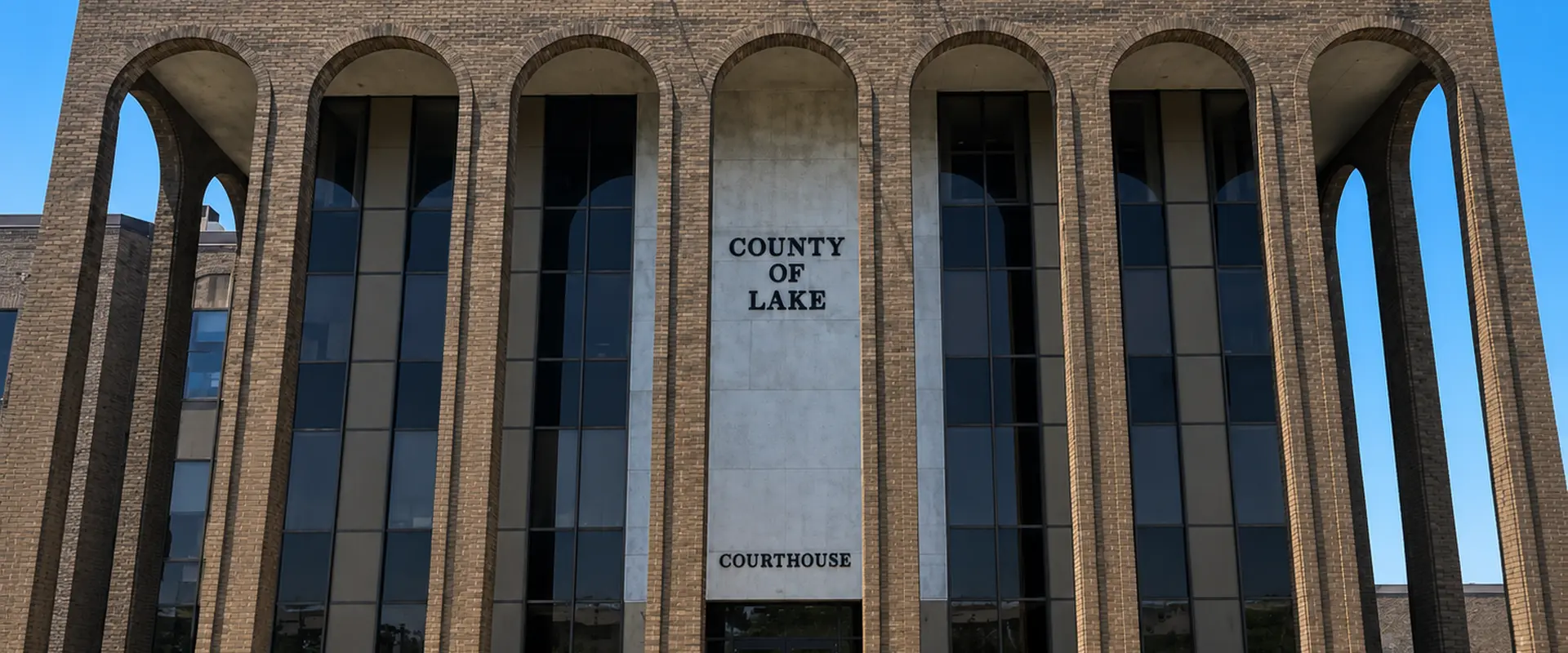
Since unifying in 1998, Lake County's court system has operated as a single Superior Court, consolidating what were previously separate court types into one unified trial court. Most of the court activities in the county occur at the Lakeport Courthouse, located at 255 North Forbes Street in Lakeport. As a multi-service courthouse, it allows residents of Lake County to conduct different types of legal activities in the same place.
A second facility, the Clearlake Branch, serves the southern portion of the county and handles a wide range of case types as well. Court staff and administrators are available to assist individuals in dealing with the court system by providing support and direction on questions and requests regarding court records and filings. Additionally, they are available to assist individuals by providing information regarding the court's schedule, the date of a specific hearing, and other process steps.
Types of Courts in Lake County, California

Understand which division handles your case because filing in the wrong one can lead to frustrating delays, potential extra costs, and procedural complications. The Lake County Superior Court operates as one unified court but is organized into distinct divisions based on the type and complexity of the case.
 Unlimited Civil and Criminal Division
The Unlimited Civil and Criminal Division is the highest-level trial division in the county and handles serious legal matters.
Primary locations: Lakeport Courthouse and Clearlake Branch
Jurisdiction includes:
- Felony criminal cases
- Civil disputes exceeding $35,000
- Divorce and child custody cases
- Domestic violence matters
- Appeals from lower-level decisions
- Habeas corpus petitions
This division handles complex litigation and serious criminal charges. Complicated steps often involve multiple hearings, legal motions, and extended timelines. Because the stakes are so high here, most people will need to work with an attorney when appearing in this division. It is also where appeals from limited civil and misdemeanor decisions within the Superior Court are reviewed.
 Probate and Family Law Division
The Probate and Family Law Division deals with things like estates and family-related legal processes. It focuses on administrative and family-related legal matters and is handled at both Lake County courthouse locations.
This division handles:
- Wills and estates
- Guardianship and conservatorship
- Adoption matters
- Family law matters including divorce and custody
- Mental health proceedings
The Probate and Family Law Division plays an important role in managing life transitions. For example, when someone passes away, this division oversees the legal distribution of their estate.
 Limited Civil and Misdemeanor Division
The Limited Civil and Misdemeanor Division handles less severe cases and acts as the first stop for many legal issues. It is accessible at both the Lakeport Courthouse and the Clearlake Branch.
Jurisdiction includes:
- Misdemeanor criminal offenses
- Traffic violations and infractions
- Civil cases with a disputed amount of $35,000 or less
- Juvenile delinquency and dependency matters
This division is often faster-moving than the Unlimited Civil and Criminal Division, with simpler procedures designed to handle high volumes of cases efficiently. Many individuals represent themselves in limited civil matters, making this division more accessible to those without formal legal training.
 Small Claims Division
For smaller monetary disputes, cases are handled by the Small Claims Division of the Lake County Superior Court. Small Claims hearings are conducted at the Clearlake Branch location.
Cases include:
- Unpaid debts and personal loans
- Property damage disputes
- Landlord-tenant disputes
- Breach of oral or written contracts
Those with straightforward monetary disputes will have their cases processed. Individuals may claim up to $12,500, while businesses are limited to claims of $6,250 or less. Attorneys are generally not permitted to represent parties in Small Claims hearings, making this division particularly accessible.
How to Access Lake County Court Records

Most court records in Lake County are open to the public. When records are not available, it is mostly because they have been sealed or restricted, usually for reasons involving juvenile matters, adoptions, mental health proceedings, or other sensitive cases.
 Online Access
The main resource for the Lake County court system is the Lake County Superior Court Online Portal, which allows users to search for criminal cases and civil filings, as well as check case statuses and upcoming court dates. The portal provides basic case information free of charge to the general public.
 Alternative Online Options
Official court portals are a useful starting point, but they can be limited in scope or difficult to navigate for someone unfamiliar with the system. Commercial platforms like CourtCaseFinder offer aggregated access to public records from multiple jurisdictions and sources, covering court cases, divorces, arrests, and other public filings. These tools can be especially helpful when you are unsure which court or agency holds the records you are looking for.
 In-Person Requests
For certified documents or older records, you can visit the Lake County Superior Court Clerk's Office at the Lakeport Courthouse. Ask the clerk's office to help you locate:
- Physical case files
- Archived documents
- Certified copies
You may also submit a Research and Copy Request Form by mail or fax to the court. Asking in person is often necessary for official or certified records, especially when the documents are required for legal or administrative purposes.
 Archived Records
Closed case files may be stored at an off-site retention facility, which means a wait of approximately five business days to have them delivered to the courthouse after a request is made. For even older or archival records, the California State Archives in Sacramento maintains historical court documents. Because older records aren't always digitized, accessing them can take additional time. You may even need to submit a formal request.
For Attorneys and Legal Professionals
Attorneys from outside Lake County will discover that most case research and status checks are handled through the Lake County Superior Court Online Portal. For eFiling, it will be through an approved Electronic Filing Service Providers (EFSPs). The portal provides access to dockets, filings, and scheduling information.
Any documents filed must comply with the California Rules of Court as well as any applicable local rules for Lake County. This includes everything from formatting requirements and filing deadlines to the documentation needed for each case type. The clerk's office at the Lakeport Courthouse can provide procedural guidance if extra help is needed.
How to File a Case in Lake County

Filing a case in Lake County requires careful attention to the details. Choosing the wrong court location, using the wrong forms, or submitting incomplete paperwork can cause delays, missed deadlines, or even a dismissal of your case.
 Step 1: Choose the Correct Division
The first step is figuring out which division of the Superior Court is right for your legal issue. The Unlimited Civil and Criminal Division deals with serious crimes, civil cases over $35,000, complex family law matters, and appeals. The Limited Civil and Misdemeanor Division deals with less serious cases such as misdemeanors, traffic cases, and civil disputes of $35,000 or less. It is important that you choose the right division because if you file at the wrong one your case can get dismissed, making you start over.
 Step 2: Complete Required Forms
After you determine which division you are going to, you need to get the appropriate documents. The Judicial Council of California provides the standardized forms for various types of cases. You can find these forms on the California Courts website. Lake County also has its own local forms available on the court's website. The kind of paperwork required will vary depending on whether your matter involves civil, probate, criminal, or family law proceedings. Read through all filing guidelines thoroughly and ensure everything is filled out in full. Gather all required signatures and supporting materials beforehand, since incomplete submissions are by far the most frequent cause of rejected filings.
 Step 3: File Your Case
Cases can be filed in person at the Lakeport Courthouse or the Clearlake Branch. eFiling is also available for Civil, Family Law, Probate, Small Claims, and Adoption matters through an approved Electronic Filing Service Provider, making it possible to file 24 hours a day. In-person filings mean that the clerk can check your documents for completeness right there on the spot. Once you have submitted your documents, make sure to hold onto your case number and proof of filing. You'll need both to monitor the progress of your case as it moves forward through the court system.
 Step 4: Pay Filing Fees
The fees for filing are different for different case types. Civil and probate cases may require baseline fees based on California's statewide fee schedule. If case filing fees present a financial burden, you may submit a request for a fee waiver. Requests for waivers will need to show proof of financial need, and the court's approval is required. Those who qualify for a fee waiver will also have EFSP convenience fees waived when eFiling.
 Step 5: Serve the Other Party
Once your filing is complete, you have no choice but to formally notify the opposing party in your case. This procedure is commonly referred to as service of process. It can be carried out through the Lake County Sheriff's Office, via certified mail, or through a private process server. Failure to serve the other party may result in your case being delayed or dismissed entirely. Be sure to keep all proof of service documentation in your personal records in case they are requested.
 Step 6: Monitor Your Case
After you file your case, you can monitor its progress using the Lake County Superior Court Online Portal or by reaching out to the clerk's office and asking directly. Court dates, hearings, and motions are subject to change, so keeping up with any updates will help ensure you never miss an appearance or an important deadline. Taking time to prepare before each court appearance, including going over previous filings and collecting relevant evidence, will keep your case organized and improve your overall effectiveness in court.
Lake County Courthouse Directory
Here are the key legal locations:
Main Courthouse
Lakeport (Civil, Criminal, Probate, Family Law). The Lakeport Courthouse serves as the primary location for most county court operations. It handles the full range of case types, including felony criminal cases, civil lawsuits, probate and guardianship matters, family law, domestic violence, mental health, juvenile, and appeals. The clerk's office manages court records, filings, and certified document requests.
Lakeport
255 North Forbes Street, Lakeport, CA 95453
Phone: (707) 263-2374
Website: lake.courts.ca.gov
Clearlake Branch
The Clearlake Branch serves the southern portion of Lake County and handles a broad range of case types including probate, guardianship, family law, civil cases, criminal felony cases, juvenile delinquency and dependency, mental health, domestic violence, and small claims hearings. It is a key access point for residents in the Clearlake area.
Clearlake
7000-A South Center Drive, Clearlake, CA 95422
Phone: (707) 994-6598
Always confirm office hours before visiting, as schedules may vary depending on the location and type of request.
Legal Help and Self-Help Resources
There are various local, state, and nonprofit resources available to guide individuals through legal processes, answer procedural questions, and provide direct assistance when needed. Below are some resources that you may use:
 Free Legal Assistance
Legal Services of Northern California (LSNC) provides support to low- and moderate-income residents of Lake and Mendocino Counties. They assist with evictions (tenants only), government benefits, elder abuse, and other civil matters. The Lake County Law Library serves as a community partner with LSNC, allowing residents to access LSNC services without driving to Ukiah. Many programs offer advice, document review, and representation for eligible cases.
Phone: (707) 462-1471
Toll-Free: (877) 529-7700
California courts also offer the California Courts Online Self-Help Center, which provides legal forms, instructions, and filing guidelines to help you manage your own case. Court clerks can only provide procedural guidance and help you fill out the correct form, but they cannot give legal advice. The Lake County Superior Court's own Self-Help Center at the Clearlake Branch also provides free assistance with restraining orders and form completion.
 Local Legal Support
California Rural Legal Assistance and other nonprofit organizations serve Lake County residents with civil rights, employment, and health care matters. If your case is not complex, you may consider representing yourself. However, for more complicated situations such as felony charges, contested custody battles, or probate disputes, having an attorney by your side can make a meaningful difference in the outcome of your case.
FAQs
How do I search for a criminal case in Lake County?
The Lake County Superior Court Online Portal can be used to look up legal cases. Having the full name or case number of the defendant will help you find the most relevant results. If you are still unable to find the court case, you can go to the courthouse.
Are court records public in Lake County?
Most court records in Lake County are available to the public. Some documents may be unavailable due to privacy or confidentiality reasons, like juvenile matters or certain family law cases. Public access may have redacted documents that deal with sensitive information. Only a select few will have access to complete documents that are not available to the public.
Is online case filing allowed in Lake County?
Yes, the Lake County Superior Court accepts eFiling for Small Claims cases through approved Electronic Filing Service Providers. You can also file in person at either courthouse location. Prior to filing, it's highly recommended that you contact the clerk's office to find out what options are available. If you have the documents reviewed and submit them in person, you are more likely to have them accepted the first time.
How long does it take to get records in Lake County?
The timing depends on how you request the records. An online search through the court portal would be immediate, but an in-person request may be fulfilled on the same day or within a few business days. Closed case files stored at an off-site retention facility can take approximately five business days to be retrieved and delivered to the courthouse.
Are online court record searches always accurate?
Online systems are useful, but their accuracy depends on their source and how often the records are updated. The court's online portal also does not include confidential, sealed, or certain restricted cases. For time-sensitive matters, it's always a good idea to confirm details directly with the court.
When is it helpful to use a third-party records finder?
Third-party platforms like CourtCaseFinder are very useful as they search for information across multiple jurisdictions or record types at once. They make the process simpler in case you don't know which court or agency holds the record.
Where can I find eviction records?
Eviction cases are typically handled in the Limited Civil Division and can be found through the clerk's office. These records are often used by landlords to verify rental history or for legal proceedings. While some basic case information may be available online through the court portal, full records could require you to visit in person.
What are the alternatives for online case records?
If you can't find a case in the search results, it may be filed under a different category, not yet entered into the system, or restricted from public view. If that happens, you can contact the clerk's office or visit the courthouse in person.
What kind of records can I find online?
Through the Lake County Superior Court's public portal, you can find basic information on criminal cases, civil filings, family law matters, probate proceedings, small claims, and traffic citations. The portal does not include sealed, confidential, or restricted records, and does not display dates of birth.
Can I save or download records for future reference?
Records on CourtCaseFinder can be viewed online and saved as digital copies, like a PDF, or printed directly from the website. Records found through the court's official portal are provided for informational purposes and are not considered certified copies. How much detail there is depends on the jurisdiction and type of record.
Other Counties in California
- Alameda
- Alpine
- Amador
- Butte
- Calaveras
- Colusa
- Contra Costa
- Del Norte
- El Dorado
- Fresno
- Glenn
- Humboldt
- Imperial
- Inyo
- Kern
- Kings
- Lassen
- Los Angeles
- Madera
- Marin
- Mariposa
- Mendocino
- Merced
- Modoc
- Mono
- Monterey
- Napa
- Nevada
- Orange
- Placer
- Plumas
- Riverside
- Sacramento
- San Benito
- San Bernardino
- San Diego
- San Francisco
- San Joaquin
- San Luis Obispo
- San Mateo
- Santa Barbara
- Santa Clara
- Santa Cruz
- Shasta
- Sierra
- Siskiyou
- Solano
- Sonoma
- Stanislaus
- Sutter
- Tehama
- Trinity
- Tulare
- Tuolumne
- Ventura
- Yolo
- Yuba
Table of Contents
